Monday, 16 November 2015

Significant Features Of Precision Engineering


Precision engineering, not people know what this concept is about and the truth of the matter is that it is still an argued upon concept upon which many experts have many different views. The most general definition of precision engineering may be explained as a means by which any engineering job can be provided with overall completion so that no leaf is left unturned per say. It is engineering that is actually done with the precision of trained experts so that at the end of the day there are no complaint’s in regards to the finished product. 
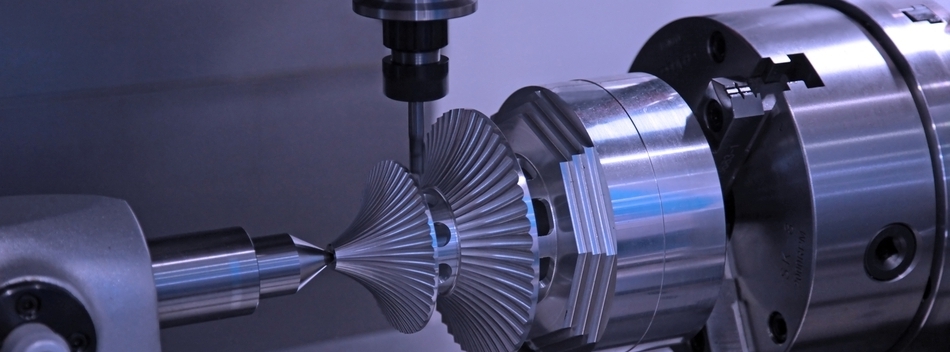

Image Source :- www.apsleyeng.co.uk

Understanding precision engineering is easy as it is applicable to almost any electronic product available in the market. These products are all put together with the help of several parts which work together simultaneously to help the product function but if one of these parts were not in alignment then the product would not work. This concept of precision placement of parts to serve the overall functionality of any product whether big or small is precision engineering. To many it is not known but precision engineering has been a very important part of our industry since the beginning of the industrial age and this factor has always been a driving point in regards to the improvement and development of all technology.

Precision engineering-its contributions to society

Engineering Services or precision engineering services directly contribute towards the development of fuel, power, computing devices, travel and luxury and so on. The dominating fact is that precision engineering is actually applicable in every p[art of our lives as almost every product we use is a part of precision engineering. From the oven in our kitchen to the car we use for transport, precision engineering has fathered them all. Though precision engineering normally deals with low tolerance parts which allows them to be changed easily an overall engineering design is of high tolerance so as to maintain the strength and integrity of the product and also to get you your money’s worth.


Precision engineering-its contributions to industry development

There are certain important fields that precision engineering has contributed towards so as to instigate development and provide adequate Engineering Services, these areas of the industry may include healthcare which keeps use safe and healthy at all times through medication and advanced machinery and tools, the production of new and improved vehicles and transport commodities and most importantly the introduction of constantly improving technological services which include, mobile phones, smart watches, tablets, laptops, computers and so on. All these products would never be a part of our lives without the help of precision engineering.

The lifeline of today’s industry

Engineering Services can be carried out by anyone trailed in this field of work but it takes a few with an excellent mastery of the subject to actually contribute to the industry with the help of precision engineering making it an exclusive skill. It takes a lot of hard work and effort to actually master precision engineering therefore making it one of the most important lifelines of modern day development.

Friday, 16 October 2015

Explore The Exciting Field of Metal Cutting Services

Fabrication can be used to define the process of preparing and manipulating raw materials that can be later used for a variety of purposes. Raw materials are the pre requisites that are required by any kind of industry. The raw materials are only used by the industries to make new and high end products that are sold under their brand name or industry logo. The raw materials are very essential and it is next to impossible to create anything new without using the raw materials. Laser cutting machines are used for working with metal sheets. As we all know, metal is useful to many kinds of industries and that too they come in use in a variety of forms. Metal sheets are used by industries as they are easy to use and are also very study at the same time. Metal fabrication services are highly used. 


Image Credit :- innovativefab.com

What Is Sheet Metal Fabrication?

Sheet metal fabrication is a process that is extensively used by industries. The most basic importance and use of these metal sheets is that they can be use easily by the industries to create anything that is new and would be called as their product. The sheets are thin and can easily be molded and bended so that they can be used without much difficulty. If the metal is hard or thick, then it would obviously become difficult to bend or mold it for further use. Laser cutting is an extensively used process that can cut and shape the metals precisely. laser cutting is not a very old concept and is used by people involved in industries at an extensive level. Laser cutting is a process that is a gift by technology ands is also very convenient. 

Benefits Of Laser Cutting 

There are a number of benefits that come with the process of laser cutting. Not only is it convenient to use laser cutting, the process is at the same time very simple and also not very heavy on the pocket. Laser cutting is extensively used by industries that manufacture automobile or engines or various parts of the automobiles. This process is used by such kinds of industries.

Other Metals That Could Be Fabricated 

There are various types of metals that can be fabricated by the laser cutting process. Aluminum, mild steel and stainless steel are the kinds of metals that are mostly cut using the laser cutting process. These metals are used extensively by industries. These metals are done so well that that is in working condition at all times and at the same time, they can be used by industries to create their own kinds of products. There are many companies that fabricate metals and provide it to their clients at very attractive and competitive prices. 


Use Laser Cutting In Order To Control Costs 

Laser cutting has a lot of advantages and one among the greatest advantage is that using this process can be used if one needs to control costs. Those companies that need to control their costs of production must use laser cutting as the metals are used many and this process can easily save up huge amount of cost as metal is used extensively and this process is less expensive and is worthy of saving huge costs. Along with being a cost effective process, this process is also beneficial as it provides a very smooth finish. The metals are so cut and processed that it leaves a good shine and lusture and makes the end product look good. It is highly advised that companies use this very famous and less expensive metal fabrication services for their company.

Monday, 7 September 2015

Know Everything About Metal Fabrication

Metal fabrication is one of the most extensively used processes as this process shapes metals into various kinds of models. The metal is melted, bent and assembled in various combinations in order to give birth to new and varied models. Metal is one very important element that is used in making cars, machines and other solid things. Metal is very sturdy and durable. It is used in almost everything that is made with the purpose of being sturdy and long lasting. A metal could be available in plain sheets or other way. They have to be molded according to the thing that has to be made. Metal fabrication is a tough process and is done by professionals. There are a number of ways though which metal prototyping is done. 


Image Source :- bkcustoms.com
 
Types of metal prototyping

Since there is a difference in the way things are manufactured while using the same elements, there will obviously be a different process altogether to do it. Similarly, there are a number of types of metal prototypes that are used. It is very important to determine the most suitable way so that the product is build in the most efficient manner. These elements mentioned below are important for fabrication.

  • One kind of prototyping is the steel metal prototypes. This is considered to be the key towards success. This type helps the companies understand and also see the product that they have been preparing. If this type is chosen properly, it makes the product look great. Also, on the other hand, if there is a mistake made, there is a heavy loss that takes place and turns out to be a failure.
  • The other kind of metal prototyping is the rapid prototyping; there are different forms of rapid prototyping and each kind of business would require the various forms as each has an individual significance. This type of prototyping can make the business achieve high success. 

Image Source :-  www.kemco.com
  • The other kind is the precision prototyping- as the name suggests everything in this form is done very precisely. The models that are made by this form of prototyping are carefully looked after. The products is very carefully modeled, detailed, and given the finishing touch. These are used extensively to build models.
  • Precision stamping is another used form of metal prototyping. The models are also kept under precision in this form; it is different from the precision stamping as it less accurate and detailed. Stamping is extensively used to detail models and is also a very cost effective solution. It gives good results and is considered pocket friendly. It is highly used for the making of unique parts, as these kinds of parts need elaborate detailing and attention. Stamping is used quite often as it can make any kinds of parts. It is not only reasonable but is also relatively a faster process. This kind of prototyping if used carefully can save a lot of time, along with saving time; it can also reduce the cost of the production that the company designing any model has to incur.

Friday, 3 July 2015

Block Construction – The Latest Method of Shipbuilding Company.

Shipbuilding is the structure and arrangement of ships which appears as a distinct establishment known as a shipyard, furthermore also termed as shipwrights, where the workers have the expertise in vessel construction and repair. Boat building is the construction of boats. As a matter of fact boats do not require the full services of a shipyard but perhaps be built in a boatyard or even smaller private facility because of the smaller size and capacity of the vessels being produced.


                                              Image Source :- worldmaritimenews.com

Block construction is the latest method of Shipbuilding Company containing accumulation of prefabricated region. The diagram of the framework are prefabricated in a shipyard, hooked to the building dock or the slipway and then raised and lifted to the location and affixed. A few of the decked shipyards are capable of building equipment and utilities into the blocks, pre –installing pipes, plumbing as well as electric cables. The more contents that can be constructed into the blocks before the final assembly requires less amount of labour for the frame to be fastened.

Modern ships of welded steel started since the 1940’s.  But, because of the insufficient compactness, the ships that were first systemized by applying this technique faced many problems thereby leading to a few disastrous but constructive modifications. The advancements of the specific ships in the 1950’s have erased the problem of brittle fracture on a very large scale, despite of the fact that there are illustrations of the uncontrolled and unchecked use of grade A and B steel. It is assumed that the problem is the outcome of steel with the unfamiliar toughness or fracture appearance transition temperature (FATT) which is used along with the side shells. Notwithstanding the random occurrences, most of the problems pertaining to brittle fractures appear to be knocked out by way of progressive method and management.


                                                Image Source :- cdn.nord-lock.com

There comes a period in the lifetime of vessels where modification and reconstruction seem illogical or improbable. Ship-breaking means the wrecking of the ships – a system arranged that grants materials and components to be reused and recycled. Generally, the fixtures can perhaps be reused in other ships, and metals (especially steel), are removed from scrap recycling where the hulls of scrapped ships are thrown away into the ship graveyard or ship cemetery.

The vessels clear submarine lines and 2ft Z-Drives actually making the transportability essential for being a sincere harbor tug. The aspects of design incorporate a large plank to increase indirect means of support and steadiness. A deep bend will uniformly divide “the point of contact “load between the haul and the ship.

As the tug is an in-house design, he customers have the flexibility to simply change the vessel as per their requirements. The vessel is adjustable to any high speed main engines for 4000 to 5000hp with suitable Z-Drive units. The haul has straight line carbon fiber bars. The customers can mention off-ship fire fighting, a hard and tough windlass, and/or a bow winch.

The vessel can be placed as a day boat or equipped for round the clock operations with up to four chambers for eight crew members with 24x7 service, full gallery, dining area and head with shower.

To conclude, a shipyard is a place where the ships land and shipbuilding is the construction of ships.

Friday, 12 June 2015

Know The Process And Benefits of CNC Machining In Manufacturing Industry

WHAT IS CNC MACHINING 

CNC is a computer-controlled process used to control machine tools. It is an advanced version of computer control as it uses exclusive and rare software in combination with a console control panel to control a variety of machines including lathes, mills, routers, drills and grinders.CNC machining, being a part of the automated production lines, is solely dependent by the manufacturing sector.
Heavy machining tools work digitally under CNC machining-During the process of manufacture, each object is considered keeping in mind  a customized software program, after which the machines are programmed using CNC machining language or G-code which controls various phase of work to be done including material feed rate, positioning and speed or velocity. In the manufacturing sectors, CNC machining is utilized both on metals as well as on plastics.

PROCEDURE:-

The basic step in CNC machining is to make a 2D or 3D CAD drawing of the object which includes its shape and measurements and after which a programmer makes the machining code, whereby the program is loaded by the operator who examines to make sure that the code is problem free.

The program run without material is known as “Cutting air” which is an important step to make sure that the tool position and its speed are actually right, and also to erase any confusion that may lead to the damage of the machines or its part.


Image Credit :- www.ejcompany.com

ADVANTAGES:-

Manual machining is less beneficial than CNC machining. Its process is much more specific as compared to manual machining as after the program is loaded and tested it can be repeated several times, where the outcome results in the perfectly manufactured parts that are able to meet the small tolerances which are similar to each other.

As compared to manual machining, heavy machining produces object faster and allows manufacturers to easily meet the high volume orders. It can also produce complex as well as three dimensional shapes that are impossible using manual machining.

Except for the timely maintenance or repairs, CNC machines can run 24 hours a day and 365 days a year without being turned off. The skills required for CNC is high as compared to the manual machining. With the help of CNC machining, there is less wastage and the increase is high for overall productivity, ensuring manufacturers to keep their costs low.

CNC MACHINES:-

CNC WATER JET CUTTER – It cuts metals or other materials by using high power water jet and pressure or a mixture of high velocity water and sand like substance. Water jet cutters cut, shape, carve or ream materials.

CNC PLASMA CUTTERS:-

It uses plasma torch used to cut steel, but can be used on other materials as well. The inert gas used in the process is blown out of the nozzle at a very high speed. Similarly, an electrical arc is passed through the gas from the nozzle to the surface of the work piece whereby turning some of them into plasma which is hot enough to melt the material being cut and moves fast to blow away the melted material from the cut.


Image Credit :- www.electrobaserp.com

CNC LATHES:-

They cut spinning metal pieces. Indexed tools and drills can be made fast and precise by using CNC lathes. They often contain upto 12 tool holders and coolant pumps in order to protect the tools from wear and tear.

CNC MILLS:-

They work by translating programs that contains letters and numbers to move the spindle to different depths and locations for cutting various materials.

CNC ELECTRIC DISCHARGE MACHINING:-

Often known as spark machining, it is used for making shapes as per our desire. Because of the recurring electric discharges between two electrodes, the material gets removed from a work piece which in turn are separated by a dielectric fluid and the discharge is subjected an electric voltage. Out of the two electrodes, one is the “tool” and the other one is the “work piece” electrode.

As the distance between the 2 electrodes is reduced, the space between them grows stronger than the dielectric strength, resulting in its breaking to allow the current to flow between the electrodes. The material is removed from both the electrodes as soon as the current flows between them. ‘Flushing’ is a process where, after the current stops new electric fluid is added into the inter-electrode which lets the solid particles be carried away while the insulating properties of the dielectric are restored.

CONCLUSION:-

As compared to the manually controlled machines, CNC machining tools delivers exact copies of an object quickly and accurately. Their speed and accuracy reduces the cost of labour and waste, while increasing productivity alongwith the efficiency.

Monday, 6 April 2015

Effective Shipbuilding Steps That Every Engineers Should Know

Marine engineers, navigating officers, and onboard members perform a number of activities in the process of building a ship. However, there is a aspect which doesn't not involve onboard members but surely needs services of naval architects, designers, and other shore working members.

In this blog post, I will be discussing about the ship building process, right from the scratch. I will be covering the basic points as the subject is so detailed that a full sized text book can be written on it. This post covers the basic technical and non-technical aspects of the process.

Invite Tenders and Quotations

The very first step involves getting bid proposal from a number of ship developers or builders. The proposal gives a basic idea about the shape and size of ship, time involved in building the ship, and the cost for building it.


                                           Image Credit :- worldmaritimenews.com

Arrive at an Agreement:

The next step involves discussing the details of the project and arriving at an agreement. Once the bid is finalized the ship builder and client discuss the details and specifications and arrive at the cost of the project. After this an agreement is made between the parties to complete the legal formalities.

Design Phase

Performance Design:

The most crucial factor in ship performance is speed. Prior to the design phase, ship models are tested in test tanks to measure the speed of the real ship incase the hull is formed in a specific manner. If the hull is not formed in the required manner then the real ship will not deliver the desired speed.

After tank testing, begins the design phase, which is usually conducted in three sub phases as per the level of details and refinement.

Basic Design: At this stage, requirements such as the load carrying capacity of the ship, the type of ship, the fuel storage, ship stability, and consumption capacity are complied with.

Detailed Design:

The first step elucidated is the detailed design stage. It includes practical implementation of the requirements analyzed before. It is ensured that the ship is built as per the design. The ship designers ensure that the ship is akin to the original requirements specified. At this level it is ensured that there is no compromise as far as the performance of the ship is concerned.


                                                Image Credit :- navaltoday.com

Production design:

This stage is ahead of the detailed design stage. Actual drawings of the components are created so that the field staff can produce them physically. Though not all parts are built from the scratch, the body of the ship is built. Other major components, such as generators, engine, and other auxiliary equipment, are sought from third party suppliers and then fitted into the ship so that the construction can be completed.

Ordering materials:

As per the specifications laid out, materials are ordered. A lot of material is required in shipbuilding. It must be ensured that the materials are sought on time.
   
Production plan:

Once the material is acquired, targets for job assignments are set. A number of things are coordinated to ensure that the production is carried out as per the plan. It is ensured that this plan is flexible so that targets can be achieved easily. All this ensures that the delivery of goods is on time.

Steel Cutting:

The next step in ship building involves cutting and processing.  Steel plates are cut and processed as per the blue print prepared in the design stage. To curve the steel plates, they are heated and bent. It needs expertise and experience to get accurate shapes for the steel plates. They are critical to the functioning of the ship.

Plate Assembly:

The cut steel plates as well as the processed components are assembled, block by block, in this stage to ensure manufacturing efficiency. The assembly is carried out phase by phase starting with small scale assembly, then mid scale, and in the end large scale assembly is performed.


                                            Image Credit :- www.navsea.navy.mil

Pipes and Wires:

Installation of rigging articles is one of the most crucial stages of ship building. Joining the assembled blocks, huge blocks are formed. Pipes, and electric wires are also installed. The rigs remain in place until the block is docked on the ground.

Mounting of Blocks:

The blocks joined in the previous stage are now mounted or installed using rigs and cranes as per the specifications. The dimensions of the blocks should remain the same.

Launch:

Once the ship is all set, the dock is filled with water to let the ship float. The ship gradually drifts into the sea. The operation of the quay is the crucial stage wherein the hull is quality checked. Every component of the ship is checked to ensure that everything is in the right size and at the right place.

Sea Trial Run:

In this stage, sea trial is conducted to ensure that the ship is perfectly operating. All the ship instruments as well as the speed of the ship are verified.

Final Delivery:

Once the trial is conducted, ship is ready to be delivered to the end client. The captain, the chief engineer and the crew prepare for the ship's debut voyage.

Above were the different stages involved in ship building. Following the specifications ensures that ship building is done perfectly. This process involves a lot of hard work. Planning as well as execution is essential to give form to a perfect ship which covers distances in a nick of time.